AgTech and STEAM Education - A perfect pair
Interested in understanding how AgTech (Hydroponics) is connected to STEAM Education. Here is a breakdown of each component of S.T.E.A.M. with more details.
-

Science- Biology
A technique of growing plants (without soil) in water containing dissolved nutrients A science where plants are nurtured without being planted in soil. Plants roots are suspended in water where the chemical nutrients required by the plant are dissolved within this water, where the ability to alter concentrations of these substances allow.
-

Science - Chemistry
Plant roots are given nutrient-rich water comprised of what they would find in healthy soil: nitrogen, calcium and phosphorus. These nutrients, along with sunlight, allow the plants to grow quickly and in much less space than traditional growing fields.
-

Science - Physics
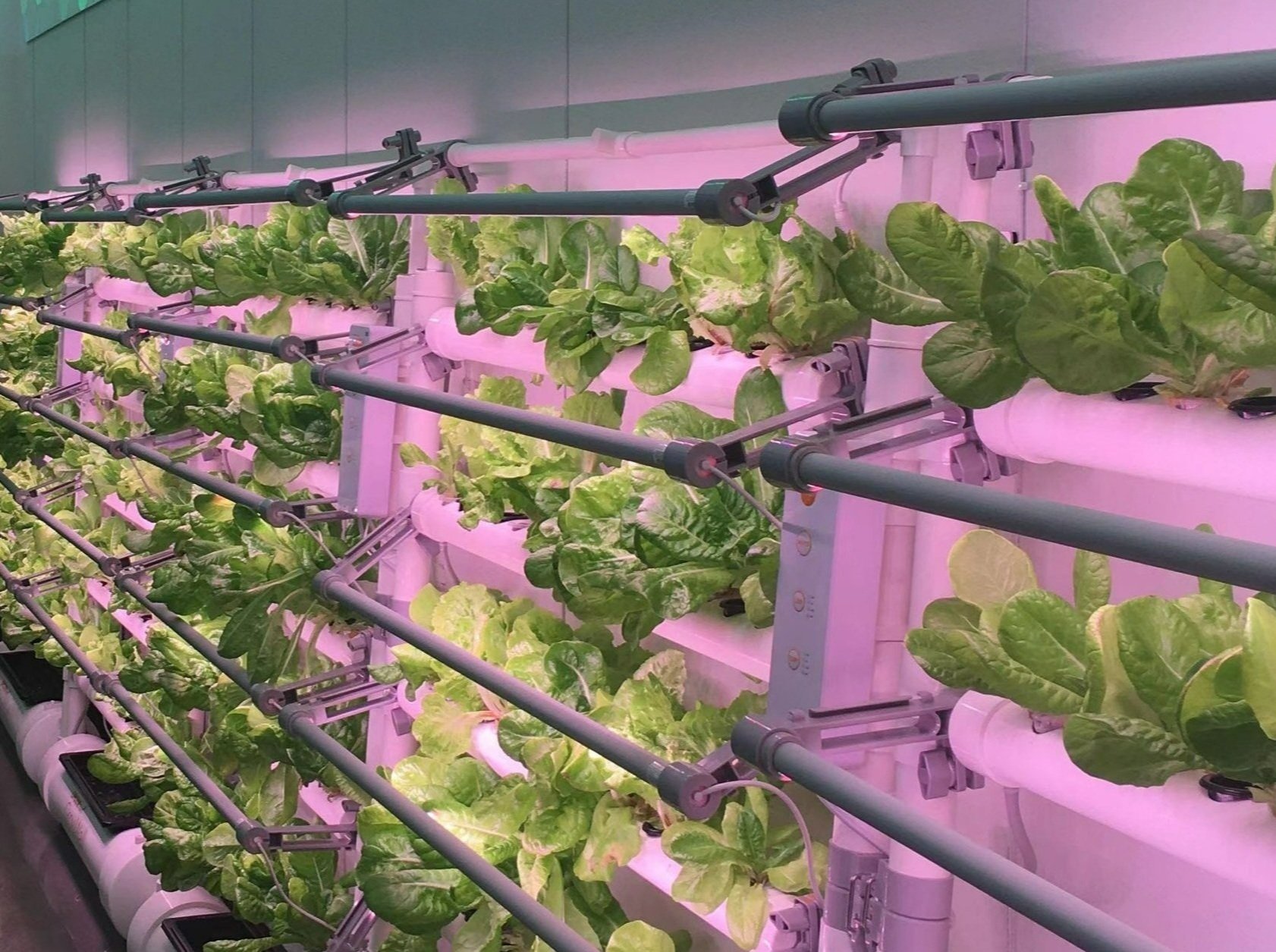
Compared to the traditional way of cultivating crops, which is also known as horizontal farming, vertical farming is the practice of producing food in indoor structures with vertically stacked layers. As well as Lighting in vertical farming is another area that has been improved through technology.
-

Technology
Hydroponics is a high-tech method of growing plants in water rich in mineral nutrients instead of soil. Hydroponics is an ideal concept for today's agriculture sector which struggles to find new fertile lands for crop productions and will enable crops to be grown in greenhouses or in multilevel buildings. There are three main types of hydroponic systems: a nutrient film technique, an Ebb and Flow System, and a Wick system
-

Engineering
A hydroponic engineer is an expert in growing plants without the use of soil. They do this by using water and nutrients to grow plants and other vegetation indoors. Hydroponic engineers are responsible for designing, building, and operating the hydroponic systems that are used to grow these plants. Hydroponics is a sustainable, engineering solution that produce more food while requiring less space and resources by using more efficient methods.
-

Arts
Hydroponics is the Art of growing plants without soil. Plants are nature’s Art - filled with vibrant colors. Drawing the plants - focusing on their shapes of the plants, creating landscaping, garden fencing, garden art, creating a theme with the garden are all aspects of the arts in gardens and growing!
-

Math
There are three key variables you want to test for in your water: pH, conductivity (EC), and temperature. Calculating the amount of fertilizer to add to nutrient solutions is part of successful hydroponic production. Calculations use multiplication, division, and subtraction. Measurements of your plants. Critical Problem-solving is also involved in the Math of Hydroponics.
-

Pre-K thru 12th grade + Higher Education
Our 3D Model of Sustainability ™ allows us to link STEAM Education for all school grades including Higher Education (including Vocational Schools). We create programs specific to your class needs that will offer all 3 parts of our 3D Model - Education, Food/Health & Wellness and Enterprise.